
Let us be honest about what this is before you scroll to the letters.
Nobody has won anything with these cards, as far as anything we hold is concerned. We ingest the publisher's organised-play calendar, which is a schedule and not a scoreboard, and the upstream platform's per-round standings are personal data about identifiable players that we have deliberately chosen not to import. So there is no field share here, no conversion rate, no "S because it went 8-0 in Osaka."
There is also no play-rate data worth the name. We host ten public Neuroscape decks as of 8 September 2026, all uploaded on 2 September, and our own card pages refuse to print an inclusion rate off a sample that size. They say "too few decks to publish a rate," which is the correct thing for them to say, and we are not going to launder ten decks into a metagame here.
So this ranking rests on the other thing: what the cards do, what the rules allow, and what the format's economy makes expensive. Every card below was read off the printed card rather than off our own database, for reasons that become clear in a minute. Where a card is ranked, the argument for it is in the prose. Where we are guessing, we say we are guessing.
The three questions that decide every rank
Genesis is one set, 255 cards, no rotation and no banned list, so everything is legal and there is nowhere for a card to go. That makes card evaluation unusually pure. Three things do almost all the work.
How many cards did it cost you? During your initialize phase you take two cards in total from your cyberdeck, your RAM deck, or one from each. One budget, not two. Every RAM you install is a card you did not draw. In a format that hands you two things a turn, a card that hands you a third is doing something almost nothing else can.
And the set is stingy about it. Thirty-five of the 255 cards put a card in your hand or select one off the top of your cyberdeck. Only fifteen use the word "draw" at all.
How much of your 25 does it tie up, and for how long? RAM spent on a character is committed: it leaves your bank and sits under that character for as long as it stays in play. Your RAM deck is exactly 25 for the whole game. So a six-cost character is not "expensive", it is 24% of everything you will ever have, parked. Gear and programs cost RAM to play and commit none, which makes them structurally cheaper than their printed numbers suggest.
That is why cheap removal ranks so high here. A two-cost card that kills a six-cost body is not a two-for-one, it is a two-for-a-quarter-of-their-economy.
What does its top-right corner demand? And this is the one that will surprise you, because it is the field our own catalogue does not carry.
The requirement corner, and why our card pages will mislead you
Most cards print a faction requirement in the top-right: one icon per point of synergy you must already control to play the card. Synergy comes from persistent cards you control with a visible faction icon. Mainframes supply none.
Our card pages carry faction, type, RAM cost, attack and defence. They do not carry the requirement, and they do not carry the cost of an activated ability either. So two cards can look identical on our site and be nothing alike.
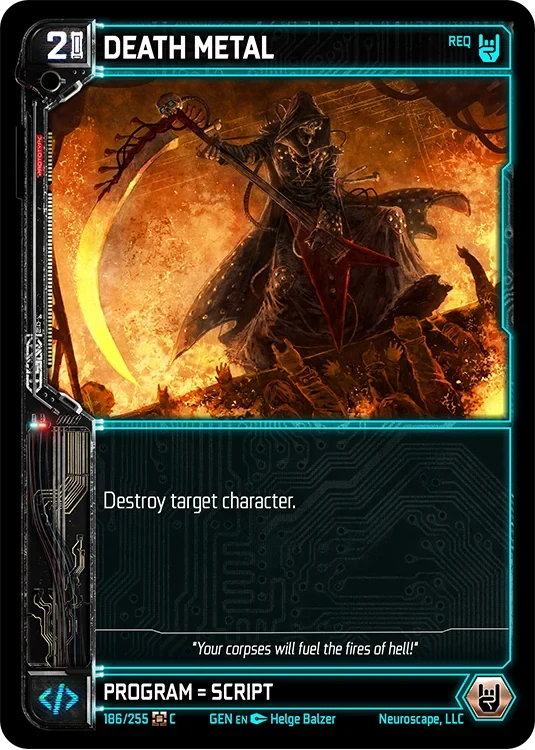
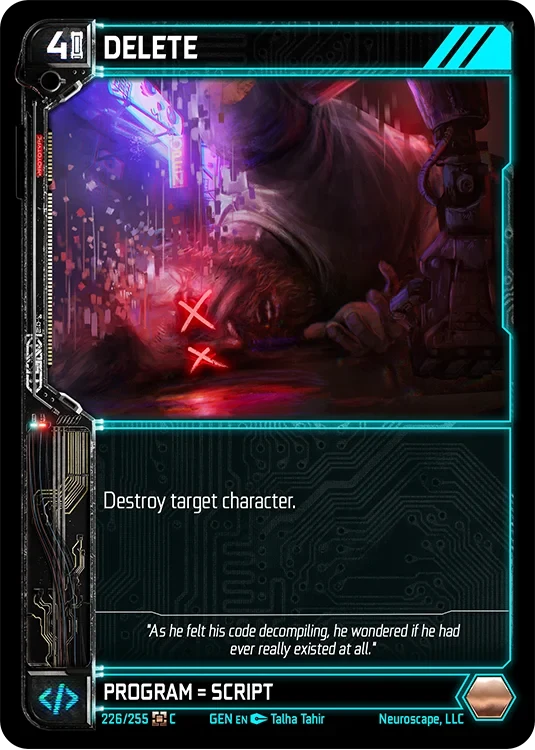
Here is the cleanest example in the set. Death Metal (GEN-186) is a two-cost common that reads, in full, "Destroy target character." Delete (GEN-226) is a four-cost common that reads, in full, "Destroy target character." Same words, twice the price.
Read the printed cards and the difference appears immediately. Death Metal prints REQ, one Thrasher icon. Delete's corner is blank. You are not paying two extra RAM for the effect, you are paying it for the privilege of not needing a Thrasher on the table first. Once you see that, the set's whole pricing logic falls open, and the discount is usually about two RAM per icon.
This matters for a tier list more than it sounds. A card with no requirement goes in any deck, on turn one, from an opening hand. A card with a requirement is a card you cannot play until your board already exists, which is exactly when you least need help.
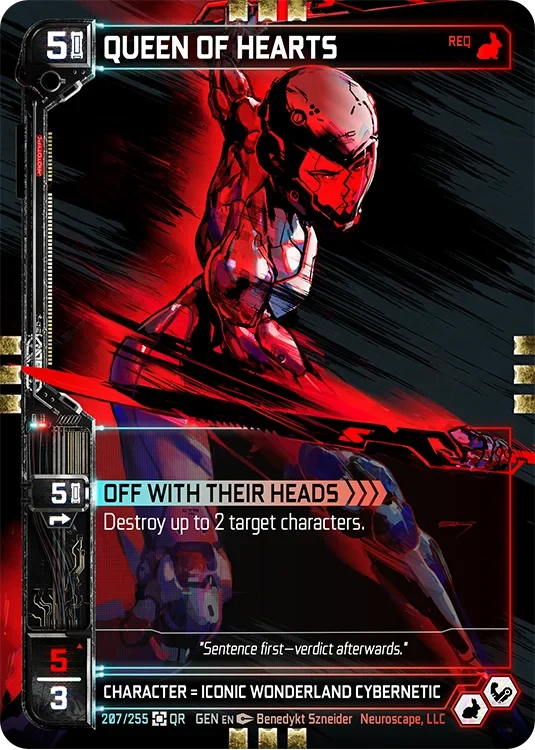
Every requirement quoted below was read off the card. So was every activated ability price, and there we found what the previous read of this set found: our pages show the effect and hide the bill. Queen of Hearts (GEN-207) looks on our site like a five-cost 5/3 that destroys two characters when it lands. The printed card names the ability OFF WITH THEIR HEADS and charges five more RAM plus running her. That is a ten-RAM sequence in a twenty-five-RAM game, and it moved her two bands.
Tier list
Forty cards, ordered within each band, strongest first.


S: the seven that answer the format's own questions
Three of the seven are mainframes, and that is not a quirk of taste. Your mainframe starts the game in play, face up, costs no RAM ever, cannot be drawn dead, cannot be discarded, and turns up in one hundred per cent of your games. It is the only card in Genesis with no variance attached to it at all. A mainframe that does something real is therefore competing against every other card in the set from a position none of them can reach.
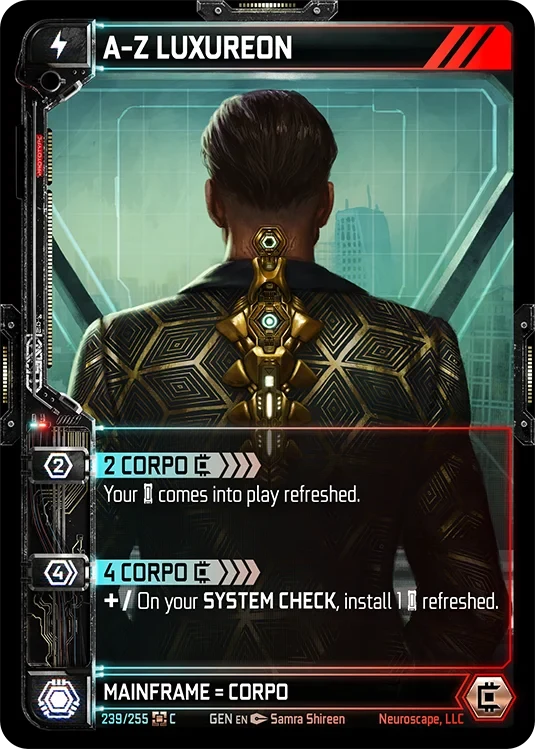
A-Z Luxureon (GEN-239) is the best card in Genesis and it is a common. At 2 cards in play and 2 Corpo synergy it makes every RAM you install arrive refreshed rather than running, which quietly repairs the format's worst exchange rate. At 4 and 4 it adds: on your system check, install 1 RAM refreshed. Free, every turn, before your draw/install step, entirely outside the two-card budget. It is the only unconditional free resource in the set and it costs you nothing but your mainframe slot.
The Oracle (GEN-135) is the budget-breaker, and it has no requirement at all. Its passive: you may look at the top card of your cyberdeck at any time, and you may play that card. That is a third card source, every turn, forever, from a four-cost 2/3 that any deck can run. It also carries PROPHECY at two RAM for a DIVINE 3 when you want to dig. Fifteen cards in Genesis say "draw". This one does something better and never uses the word.
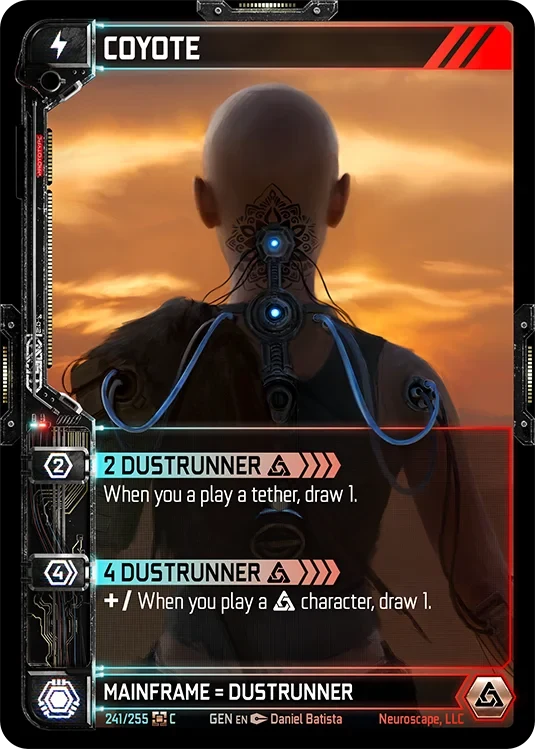
Coyote (GEN-241) is the draw engine the format cannot otherwise get. At 2 Dustrunner it draws when you play a tether, which is narrow. At 4 Dustrunner it adds a card every time you play a Dustrunner character, which is not narrow at all in a deck built to do exactly that. Free, repeatable card advantage, on a common.
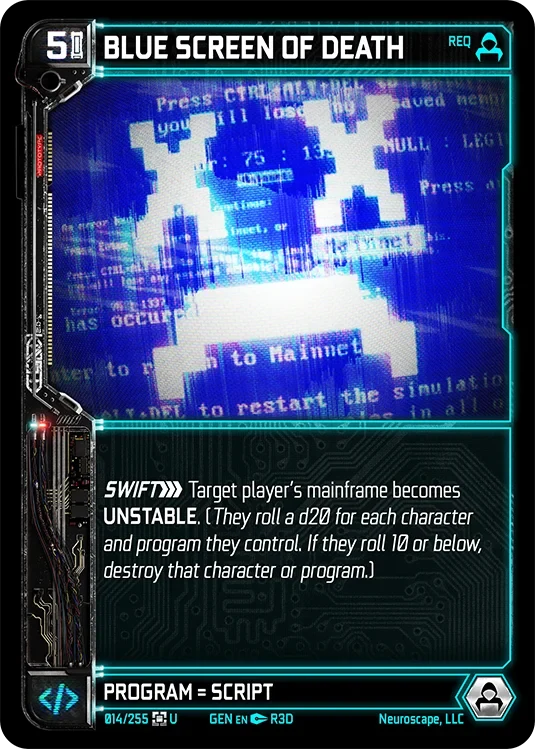
Blue Screen of Death (GEN-14) is five RAM, one Hacker icon, and SWIFT: target player's mainframe becomes unstable, and they roll a d20 for each character and each program they control, losing everything that comes up 10 or under. That is a one-sided sweeper, at instant speed, that hits programs as well as bodies. Call it half their board on average, and note that they do not get to choose which half.
Death Metal (GEN-186) is unconditional removal for two RAM behind one Thrasher icon. Against a board where a single character can represent a quarter of an opponent's lifetime economy, killing one for two is the most efficient exchange the set offers.
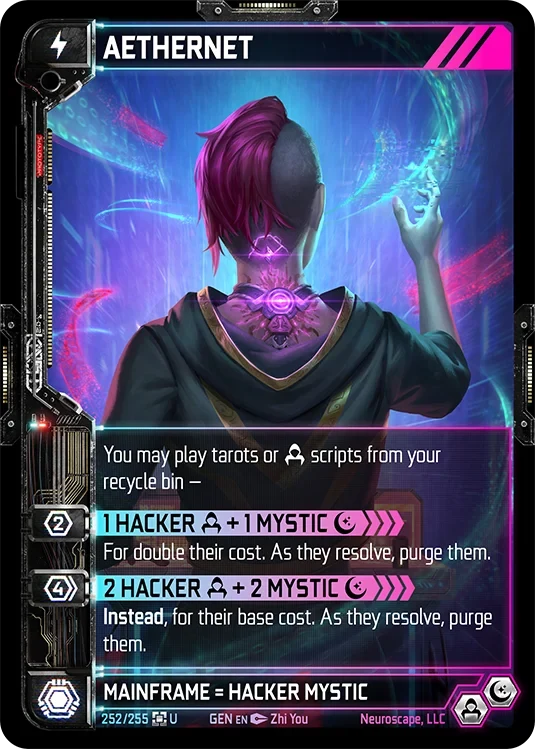
Aethernet (GEN-252) is the third free card here. At 1 Hacker plus 1 Mystic you may play tarots and Hacker scripts out of your recycle bin at double cost, purging them as they resolve; at 2 and 2 it drops to base cost. With 22 tarots in the set, that turns a graveyard into a second hand, from a card you never had to draw.
Delete (GEN-226) rounds out the band on universality alone. Four RAM, blank requirement corner, "destroy target character." Every deck in the format can play it in every game from turn one, which is a sentence that is true of almost nothing else in Genesis.
A: the strong picks
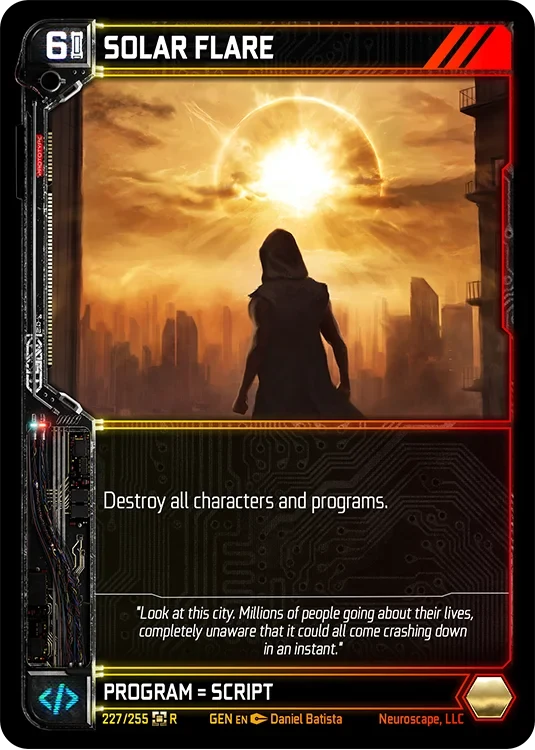
Solar Flare (GEN-227) destroys all characters and programs for six, with no requirement. It is the only true reset in the set and it is in A rather than S purely because six RAM is a quarter of your economy and it eats your own protocols too.
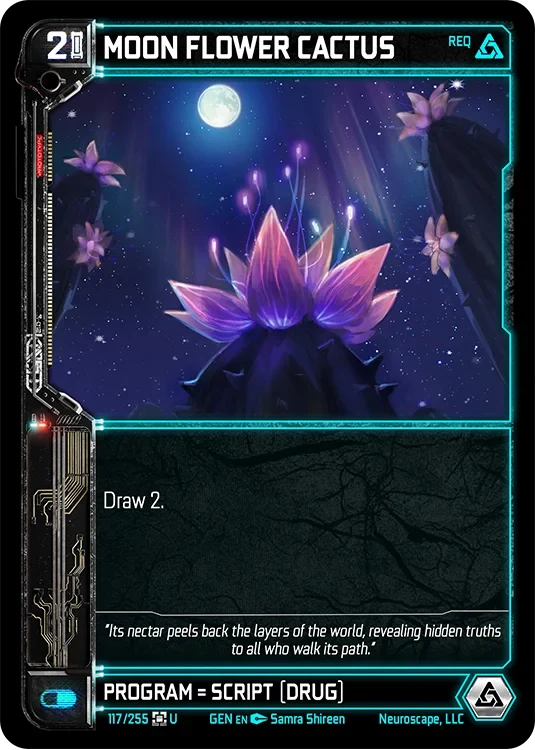
Moon Flower Cactus (GEN-117) reads, entirely, "Draw 2," for two RAM behind one Dustrunner. In this format that is a rare and unglamorous excellence.
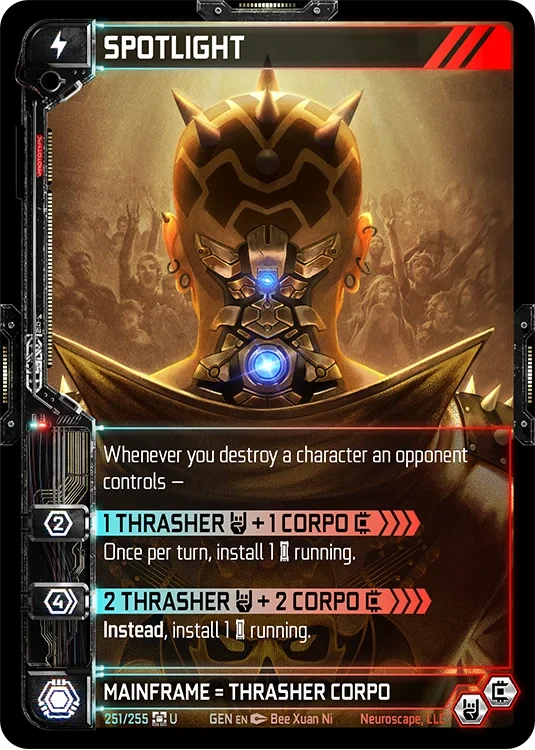
Spotlight (GEN-251) installs a RAM whenever you destroy an opponent's character: once per turn at 1 Thrasher plus 1 Corpo, and without the once-per-turn cap at 2 and 2. Our page renders both tiers as the same sentence, which makes the card look broken and is really our rendering losing the word that matters.
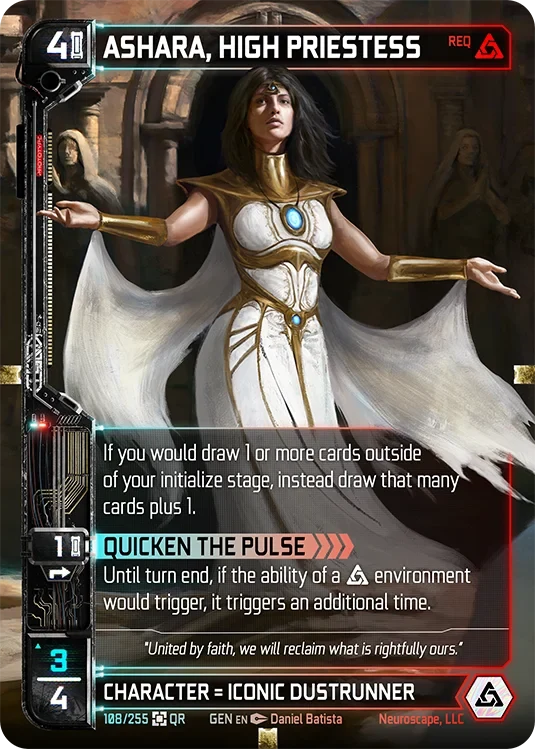
Ashara, High Priestess (GEN-108) turns every draw outside your initialize stage into that many plus one. A multiplier on the scarcest resource in the game, on a 3/4 body.
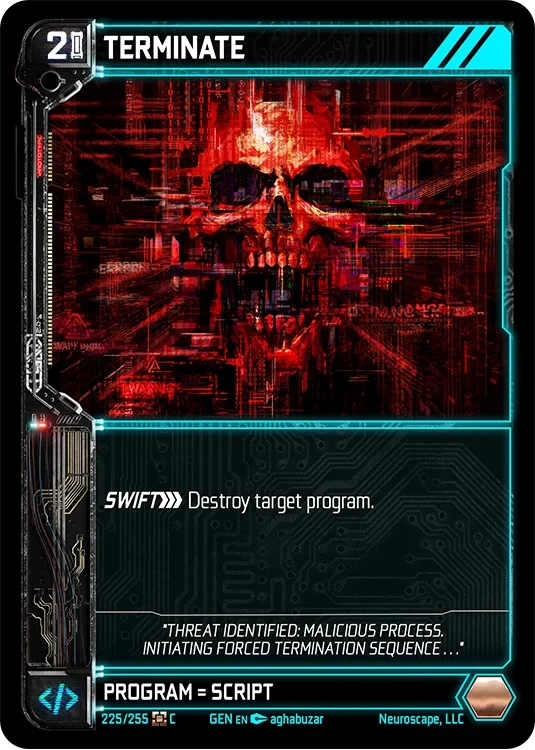
Terminate (GEN-225) is two RAM, swift, no requirement, destroy target program. It is the answer to protocols, environments, viruses and face-down trojans, and it is a common that any deck can run.
Nova, the White Rabbit (GEN-13) is a requirement-free 2/3 with two paid abilities: LUCIDITY draws a card for one RAM and a run, PAST LIFE tutors a Hacker or Wonderland card for two and purges her. Our page prints both effects as one paragraph with no prices, which makes her look absurd. She is merely very good.
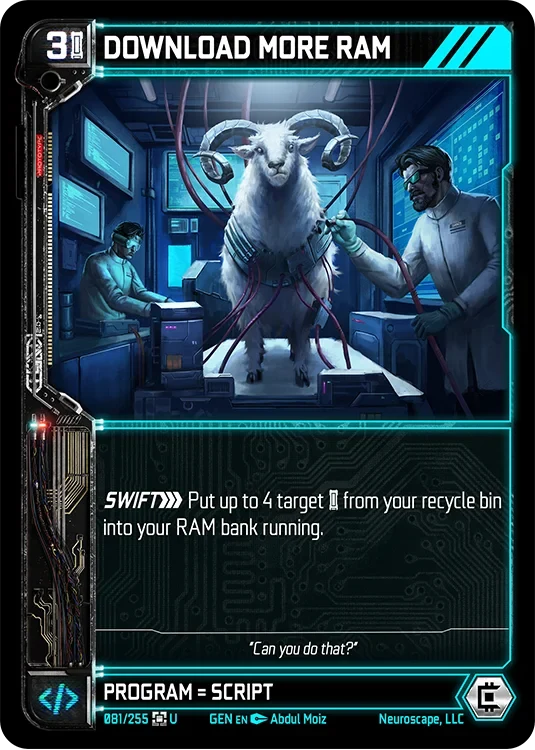
Download More RAM (GEN-81) is here because it is the only card in Genesis that undoes RAM destruction: three RAM, swift, put up to four RAM from your recycle bin back into your bank running. Against the five cards that destroy your RAM, this is the entire answer column.
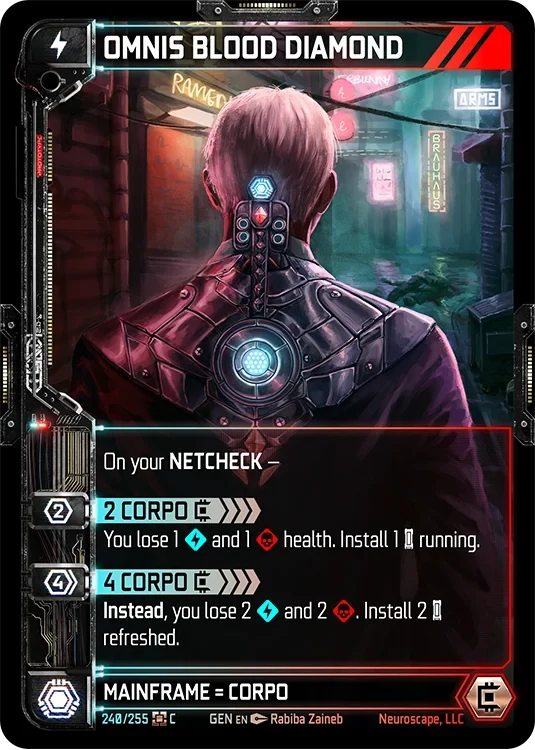
Omnis Blood Diamond (GEN-240) is the fastest ramp in the set and it charges blood: at 4 Corpo, two RAM refreshed every netcheck for two mainframe and two bioframe health. Four health a turn against starting totals of 20 and 20 is a real clock, pointed at you.
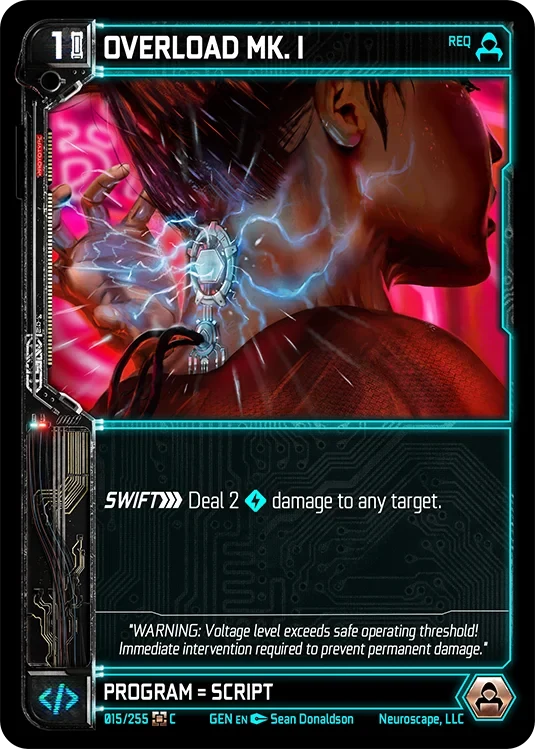
Overload Mk. I (GEN-15) is one RAM, swift, two mainframe damage to any target. Cheap, instant, and pointable at a face or a body.
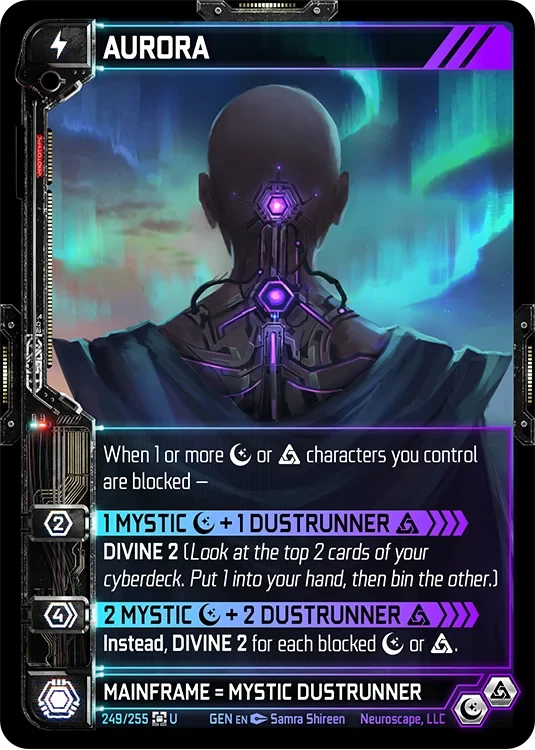
Aurora (GEN-249) gives you DIVINE 2 whenever your Mystic or Dustrunner characters get blocked, and at 2-and-2 does it for each of them. Free selection every combat.
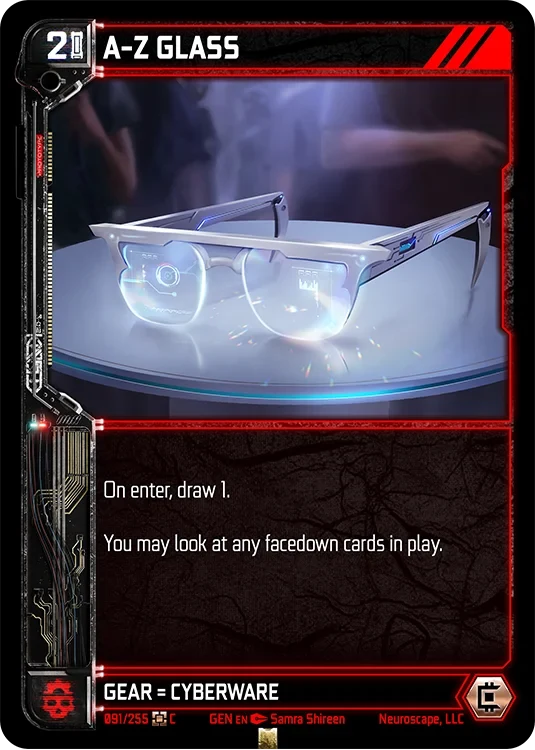
A-Z Glass (GEN-91) is a two-cost gear with no requirement that draws a card on entry. Gear commits no RAM, so this is a cantrip that leaves a permanent behind and unlocks your Cybernetic and gear synergies on the way past.
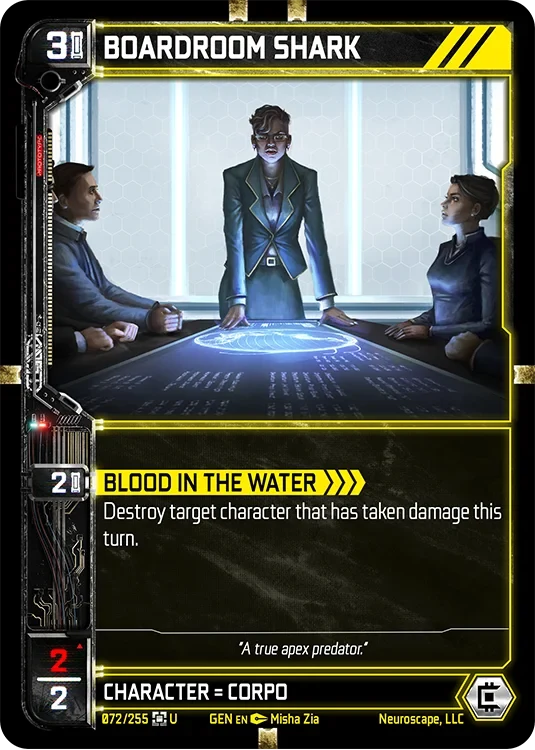
Boardroom Shark (GEN-72) is a requirement-free 2/2 whose BLOOD IN THE WATER kills any character that has taken damage this turn, for two RAM. Repeatable removal attached to a body is how a fair deck beats an expensive one.
B: playable, and honest about it
The B band is where good cards meet a real tax.
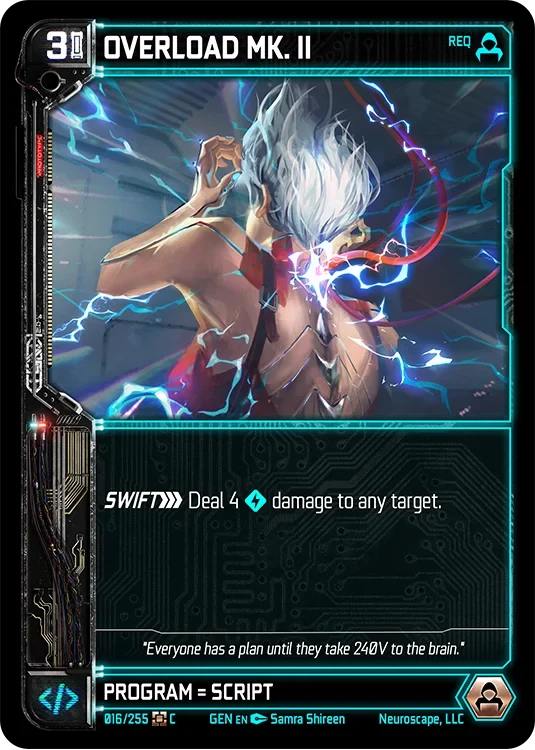
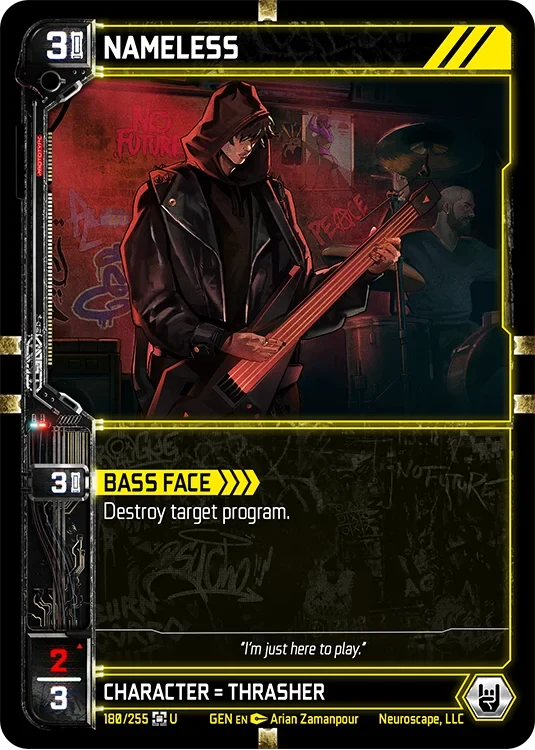
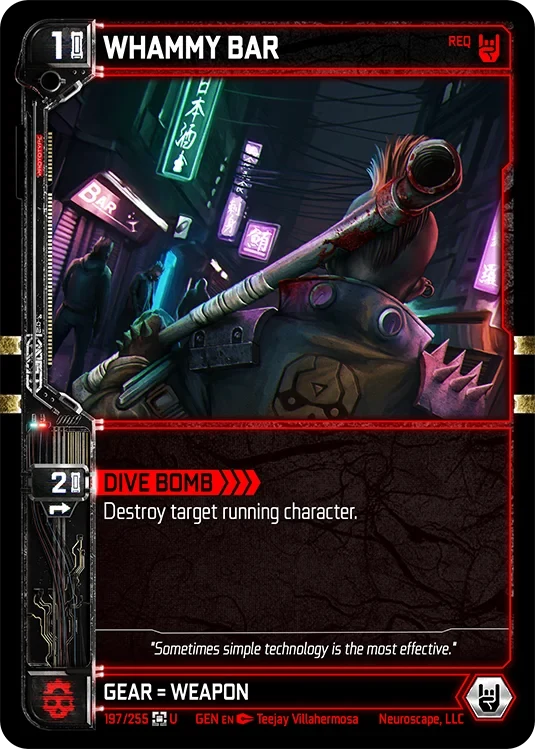
Overload Mk. II (GEN-16) is the Mk. I effect doubled for two more RAM. Nameless (GEN-180) is repeatable program destruction on a 2/3, but the ability costs three each time. Whammy Bar (GEN-197) is a one-cost gear that kills a running character for two more, which is excellent against attackers and blank against a defensive board.
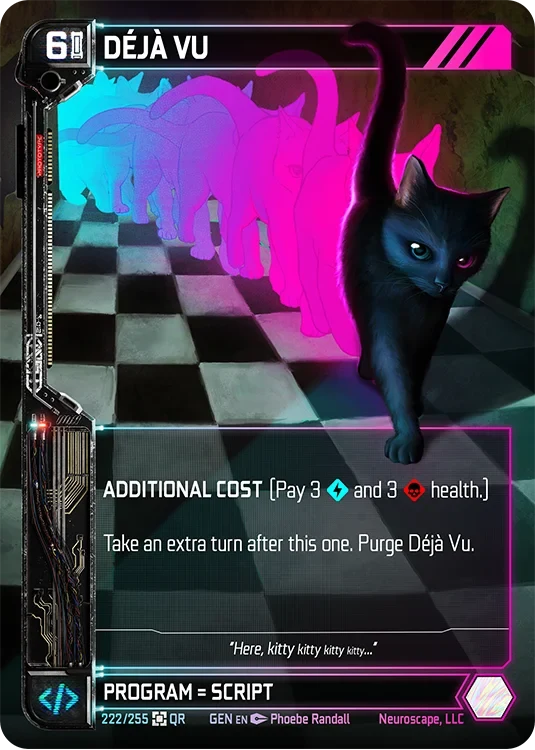
Queen of Hearts (GEN-207) is the cautionary tale from earlier: a fine 5/3, whose double kill costs another five RAM and a run. Déjà Vu (GEN-222) takes an extra turn for six RAM plus three of each health, which buys you another two-card budget and another refresh, and is the most expensive card here by a distance.
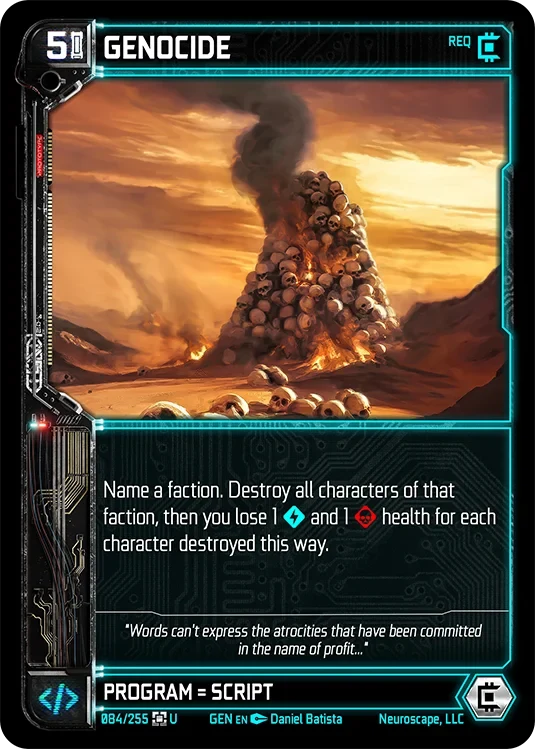
Genocide (GEN-84) names a faction and destroys it, then charges you a point of each health per body. In a format with no colour-identity limit, opposing boards are often mixed, and the card is at its worst exactly when their deck is at its best.
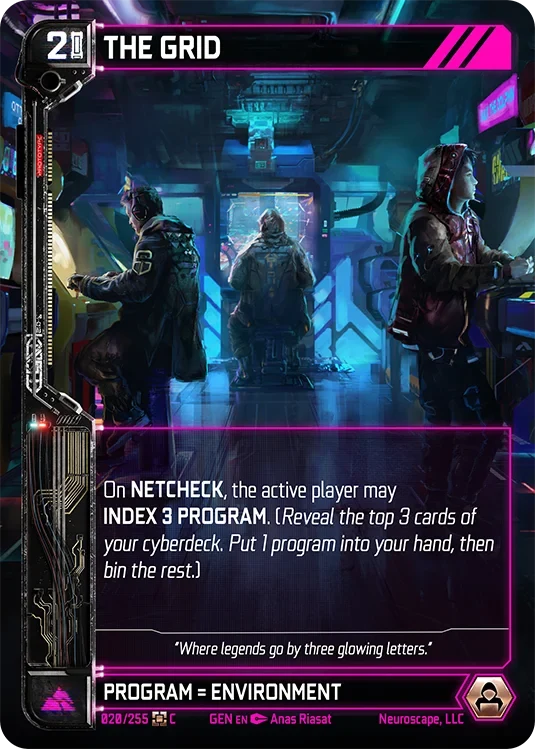
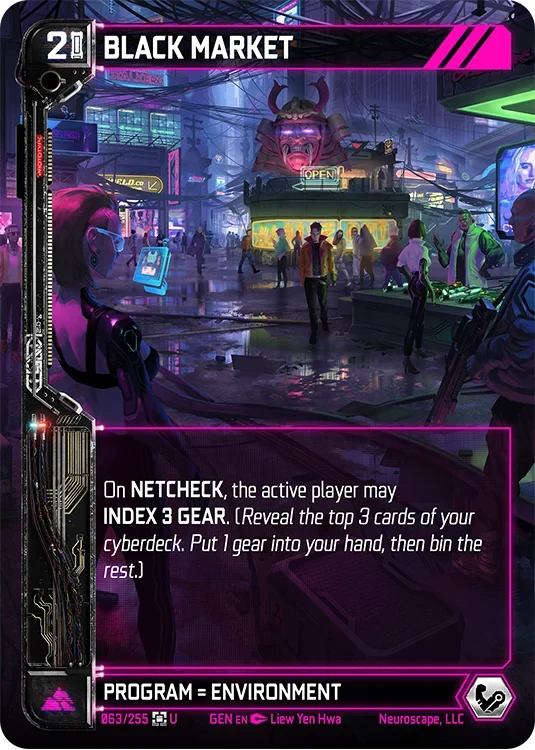
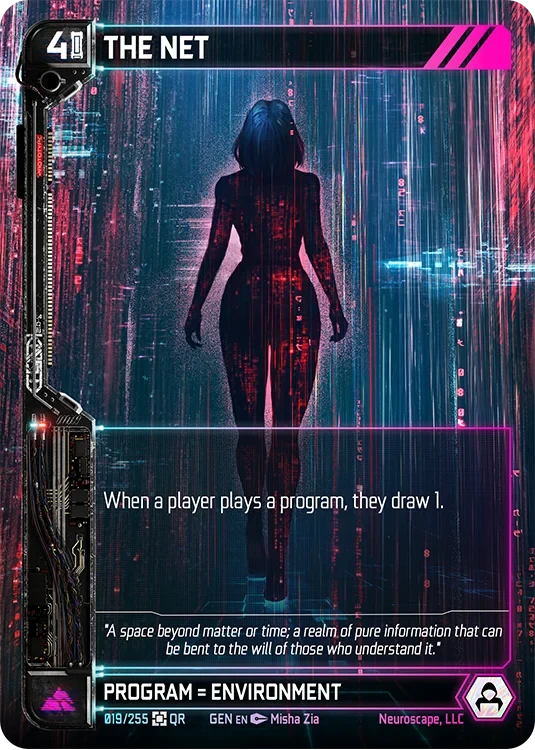
The Grid (GEN-20) and Black Market (GEN-63) are two-cost environments giving a free INDEX 3 every netcheck, and The Net (GEN-19) draws a card whenever any player plays a program. All three are strong and all three are symmetric, which is why none of them is higher. Only one environment can be in play at a time, so they also fight each other.
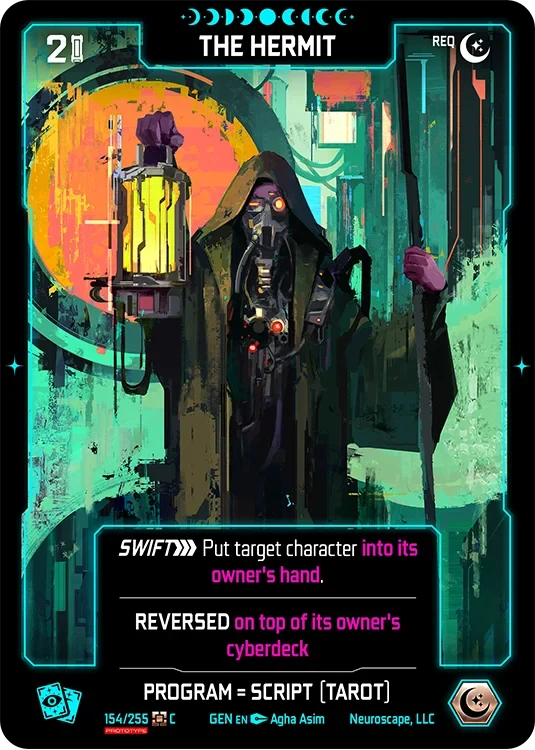
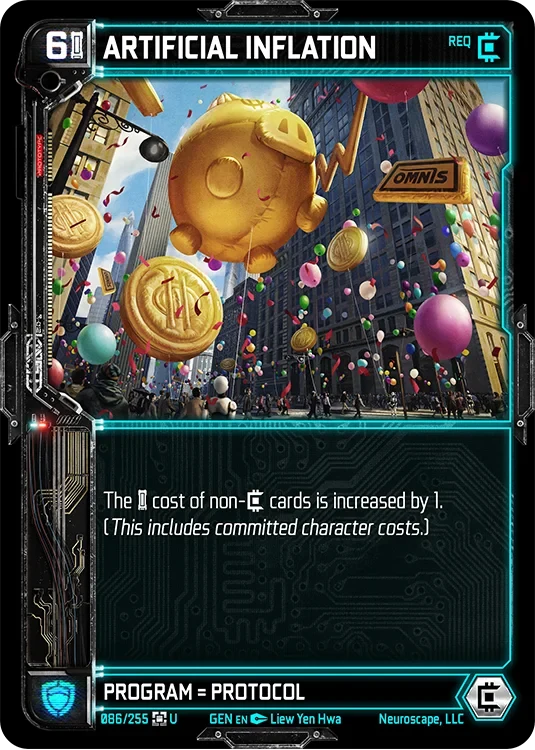
The Hermit (GEN-154) bounces a character at swift speed for two behind one Mystic. Artificial Inflation (GEN-86) is the most interesting card in the band: it raises the RAM cost of non-Corpo cards by one and says explicitly that this includes committed character costs, which means it can push an opponent's paid board into being underpaid and hand them an instability check they did not plan for. Six RAM is a lot to pay for a lock, but it is the only card that attacks the economy itself.
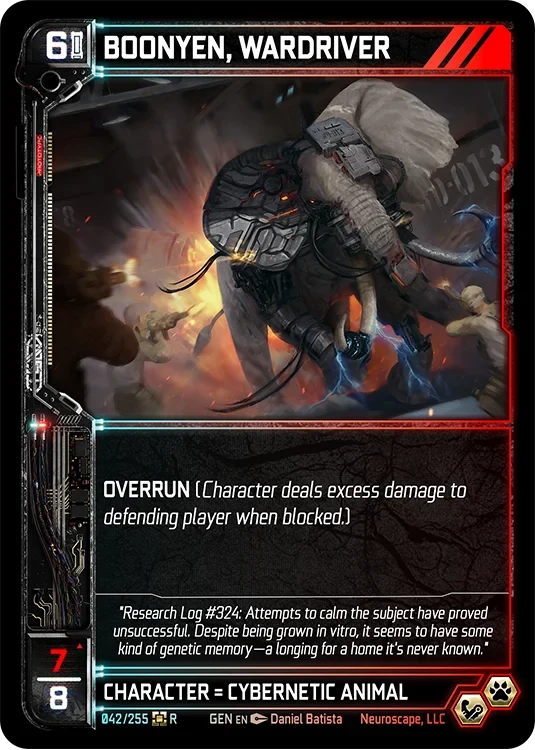
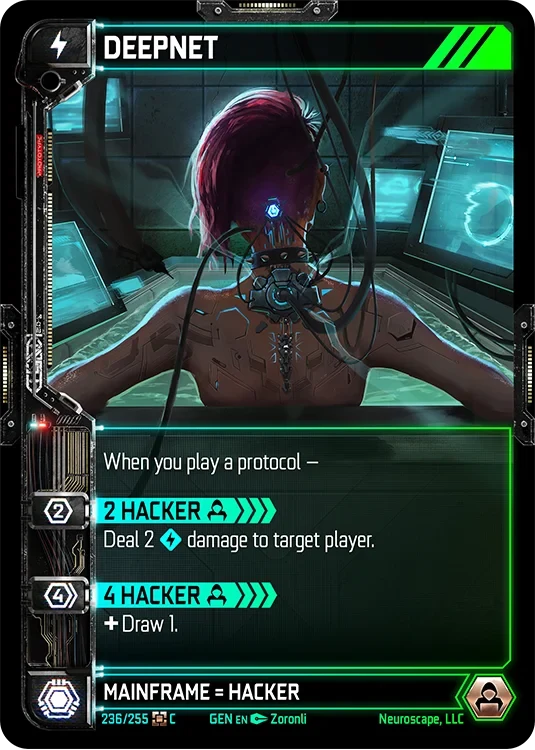
Boonyen, Wardriver (GEN-42) is a 7/8 with OVERRUN and no requirement, which is as much stat line as six RAM buys anywhere. Deepnet (GEN-236) is a free mainframe that damages and then draws, but only when you play a protocol, and the set prints six protocols and five trojans. Eleven triggers is thin.

C: niche, and two of them are traps
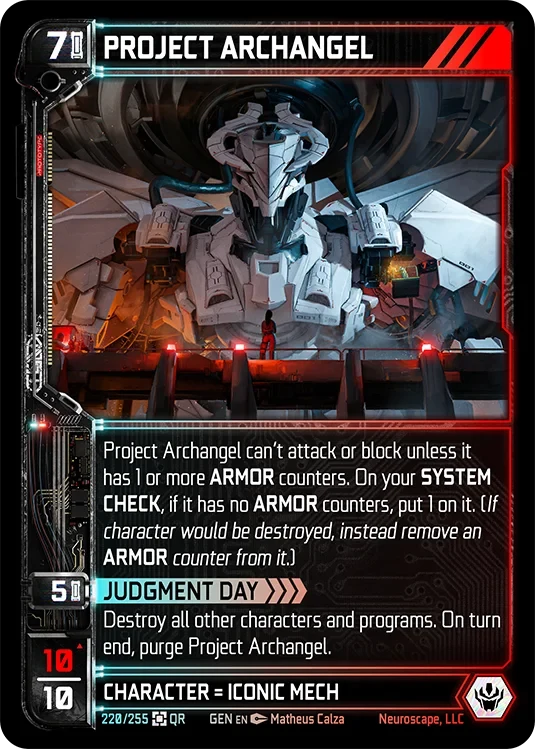
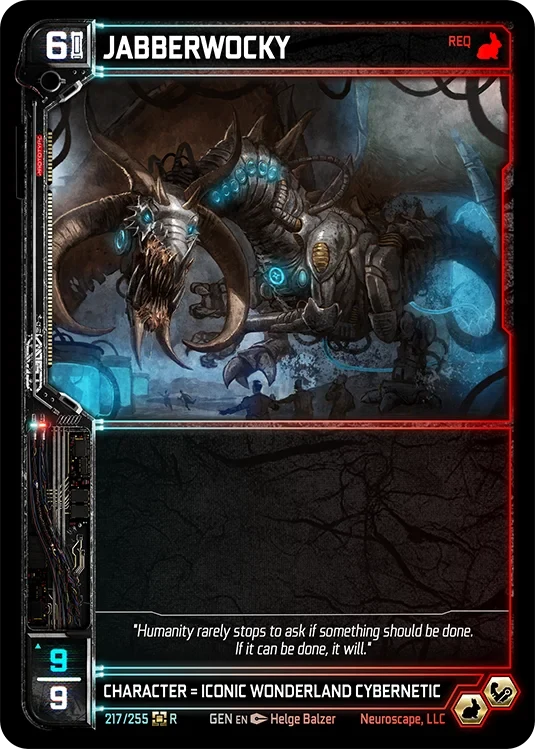
Project Archangel (GEN-220) is a 10/10 for seven that is very hard to kill, since destruction removes an armour counter instead, and it replaces one every system check. It is also 28% of your lifetime bank standing in one place, and its JUDGMENT DAY costs five more. Jabberwocky (GEN-217) is a 9/9 for six with an entirely blank text box and a Wonderland requirement. Both are real cards. Both are mortgages.
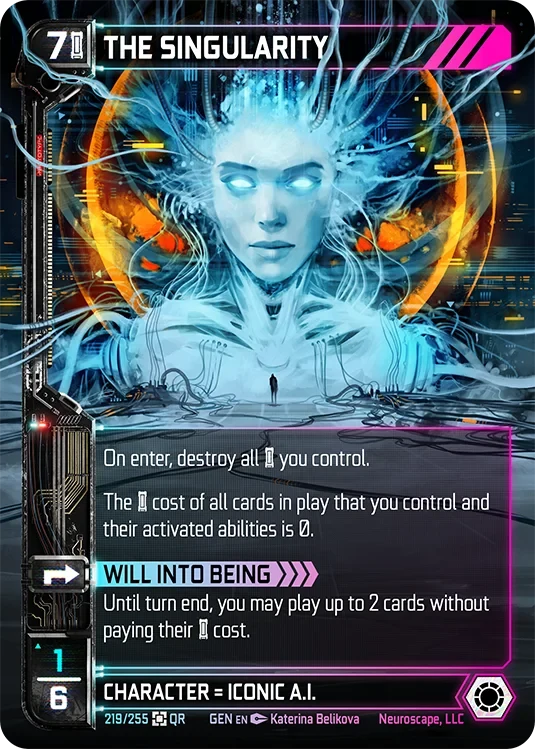
The Singularity (GEN-219) is the set's most spectacular one-way door: on entry it destroys all your RAM, then sets the cost of everything you control, and their activated abilities, to zero. It is not a trap exactly, but it asks you to assemble seven RAM and then delete your economy, and if the turn does not end the game you are playing the rest of it with nothing.
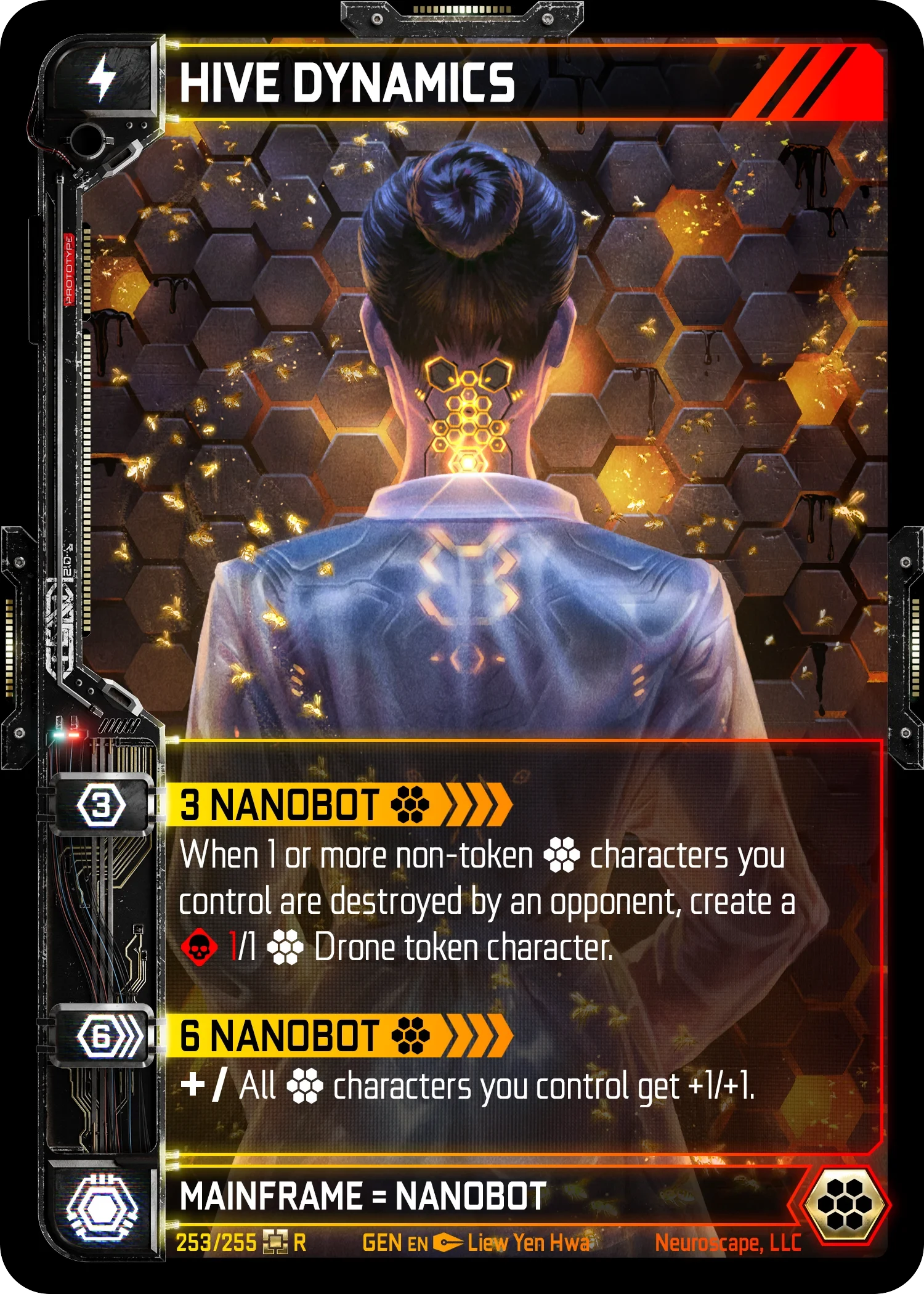
Hive Dynamics (GEN-253) is the only mainframe in the set whose tiers ask for 3 and then 6 faction synergy, and Nanobot is a seven-card faction of which exactly five cards can supply synergy at all. You can get there — four copies of each is allowed — but you are building six Nanobot persistents onto a board to switch on a mainframe, and nothing else in the set rewards you for it.
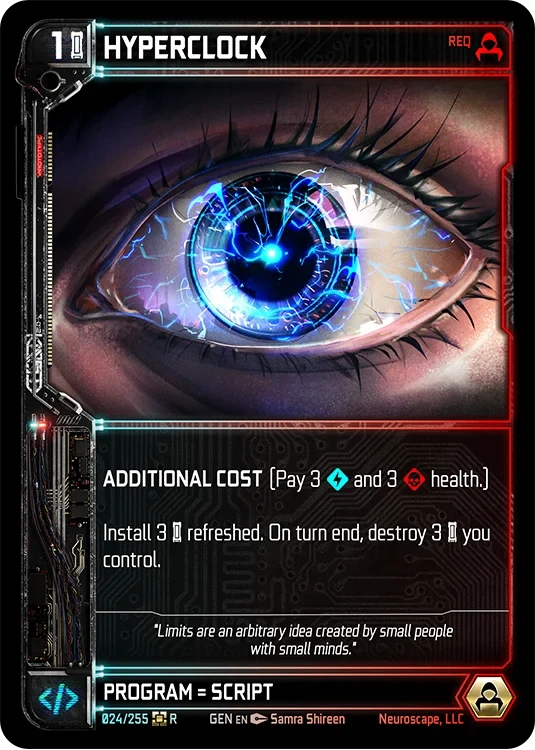
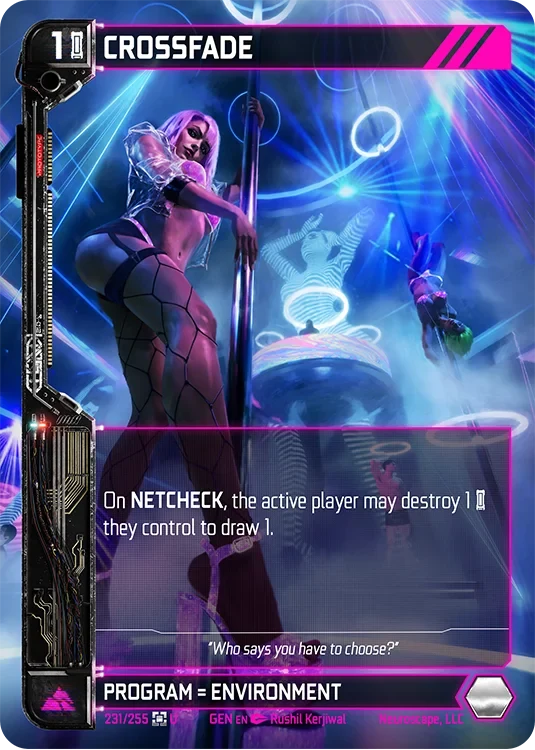
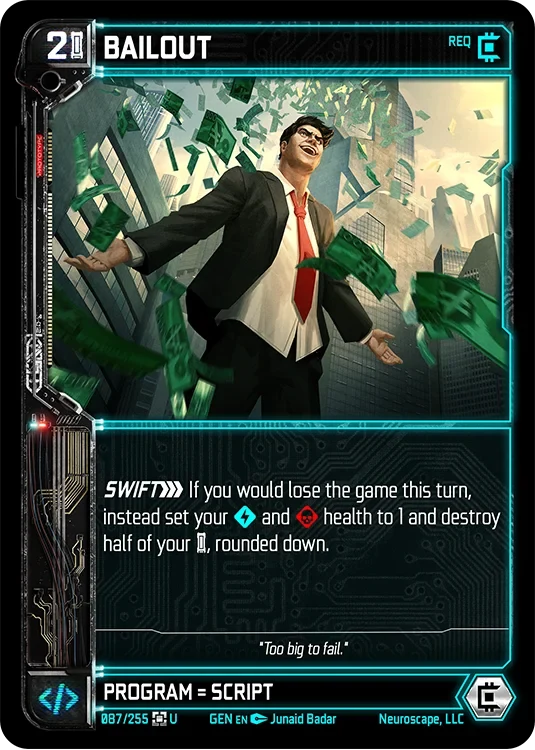
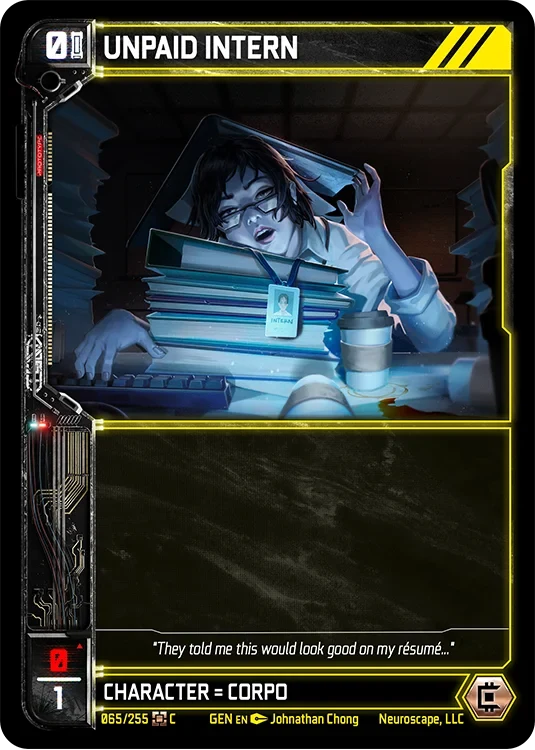
Hyperclock (GEN-24), Crossfade (GEN-231) and Bailout (GEN-87) are all cards that pay for something by permanently destroying RAM out of a pile of 25. That is a defensible price for a game-winning turn and a terrible one for anything else. And Unpaid Intern (GEN-65) is a 0/1 for nothing with an empty text box, which is genuinely playable as a free body for synergy counting and mainframe thresholds, and is in C because that is all it is.
No band was padded and none was left empty. If a band here looks short, it is because forty cards is what we were prepared to argue for.
What we could not check
Three limits, stated plainly.
This is a projection, not a finding. Nothing above has beaten anybody. Every rank is an argument from card text and the rulebook, and the first published results could reorder this list badly. That is a feature of the honest version.
Our own card pages are missing two fields that decide ranks. Faction requirements and activated-ability costs are both absent, which is why every card here was checked against its printed image. Until that is fixed, treat any Neuroscape card that looks underpriced on our site as unverified.
We did not rank 215 of the 255 cards. A ranking is a claim you have to defend, and we would rather defend forty than pad out a ladder. The rest of the set is covered card by card in our Genesis set review.
Everything above is our reading of the publisher's Neuroscape Rulebook V10.2, updated 16 June 2026, and of the 255 cards in our Genesis catalogue. Where the two disagree, the rulebook wins.